

Using Simulation to Ensure a Material or Product Performs
Vibration testing services provided by Innovative Test Solutions, Inc. (ITS) help industries including aerospace and transportation meet necessary requirements.
What is Vibration Testing?
From the tiniest component to the most complex machine, internal movements and motions cause some level of vibration. And engineers and manufacturers need to understand how each component will hold up to ensure everything is working properly.
While in a test environment, vibration testing simulates the conditions that a component or structure could face during its lifetime.
There are a variety of vibration tests including modal and vibration analysis and solid modeling and finite element analysis testing.
Vibration Testing Equipment
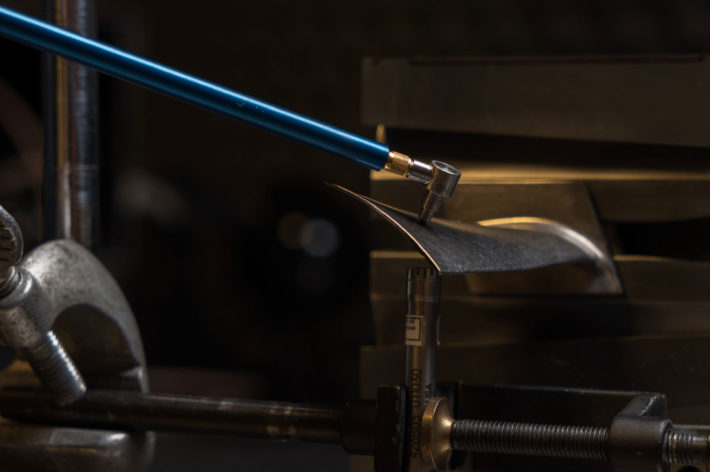
ITS is equipped with an array of shaker systems ranging in size from small desk-top piezoelectric units to larger floor models capable of producing 6,000 pounds of force. Some of the large shakers are equipped with integrated slip tables and state-of-the-art fully digital control systems.
Fully digital control techniques are used for all vibration fatigue testing. This technique eliminates human error and decreases scatter in results. Testing can be performed at room or elevated temperatures. Each shaker used in our facility is outfitted with this innovative digital system.
ITS engineers also have the capability to perform many types of component testing on our fully digital shakers and shaker slip table. Our slip table is easily modified to mount either simple or complex systems. Multi-axis testing can be executed with little-to-no extra setup time than a single axis test.
Frequently Asked Questions
What is vibration testing?
Vibration testing is a process used to assess the durability and performance of a product or component under various vibration conditions. It simulates the stresses and forces that an object might experience during transportation, operation, or use, ensuring that it will perform reliably in real-world scenarios.
Why is vibration testing important?
Vibration testing helps identify potential issues such as weaknesses in a product’s design or construction that could lead to failures during normal operation. It is crucial for ensuring the longevity, reliability, and safety of mechanical components in industries like aerospace, automotive, electronics, and more.
What industries benefit from vibration testing?
Vibration testing is vital across multiple industries, including:
- Aerospace: ensuring the integrity of aircraft components during flight
- Automotive: testing vehicles parts for durability and performance under road conditions.
- Electronics: Verifying that sensitive electronics can withstand vibrations during use.
- Industrial Equipment: Ensuring machinery and parts can perform under vibration-induced stress.
How does vibration testing work?
Vibration testing works by using specialized equipment that generates mechanical vibrations on a test object. These vibrations are controlled and monitored to simulate real-world conditions. The test may involve shaking the object at different frequencies, amplitudes, and directions to analyze how it responds and identify any weaknesses.
What type of vibration testing is available?
Sinusoidal Vibration Testing: Applies a consistent frequency to simulate repetitive conditions.
- Random Vibration Testing: Simulates unpredictable and random vibrations encountered during real-world use.
- Shock Testing: Focuses on sudden, intense vibration or impacts that could cause damage or failure.
- Resonance Testing: Determines the natural frequency of a component to ensure it avoids resonance during operation.
What type of equipment is used in vibration testing?
Vibration testing uses specialized equipment like:
- Shakers and vibration tables: to generate and control vibration.
- Accelerometers and sensors: to measure the vibration and movement of the test objects.
- Data acquisition systems: for collecting and analyzing test data to access performance.
e
What are the benefits of vibration testing for product development?
Vibration testing helps engineers identify weaknesses or potential failure points early in the design process, allowing them to make necessary adjustments before manufacturing. This improves the overall quality, safety, and reliability of the final product, reducing the risk of costly failures in the field.
How long does vibration testing take?
The duration of vibration testing can vary depending on the complexity of the test and the product being tested. It can take anywhere from a few hours for simple tests to several days for more comprehensive testing, depending on the testing requirements and objectives.
Can vibration testing help reduce maintenance costs?
Yes, vibration testing helps identify design flaws or weaknesses that could lead to premature wear or failure. By detecting these issues early, it allows manufacturers to make improvements, reducing the likelihood of costly repairs, maintenance, or product recalls.
How do I know if vibration testing is necessary for my product?
If your product will be exposed to vibrations during use, transportation, or installation, vibration testing is essential. If your product needs to meet specific performance standards or regulatory requirements, vibration testing ensures it meets those criteria. Consulting with an expert can help determine if vibration testing is necessary for your specific application.
For more information regarding vibration testing, please request a quote below.

For More Information About Our Testing Services, Contact Us Today.
Through constant improvement, innovation, and thorough testing, ITS is able to create an environment that ensures personal and professional success. To secure your future, contact us for more information.