

What is Standardized Testing?
Standardized testing is the process of evaluating materials, components, or assemblies against established national and international specifications to confirm compliance, consistency, and performance. These standards define specific test methods, acceptance criteria, and documentation requirements, ensuring results are repeatable, comparable, and recognized across industries and markets.
At ITS, standardized testing is performed in strict accordance with ASTM, ISO, DIN, MIL-STD, and NASM requirements. Using calibrated equipment, controlled procedures, and documented methodologies, our team ensures every test aligns precisely with the applicable specification. This approach produces traceable, defensible data that supports certification, regulatory approval, and quality assurance programs.
By verifying conformance to recognized standards, standardized testing helps manufacturers reduce risk, ensure product reliability, and meet domestic and international market requirements. It is a critical step for industries such as aerospace, automotive, defense, construction, medical, and industrial manufacturing, where compliance and performance cannot be compromised
Types of Standardized Testing
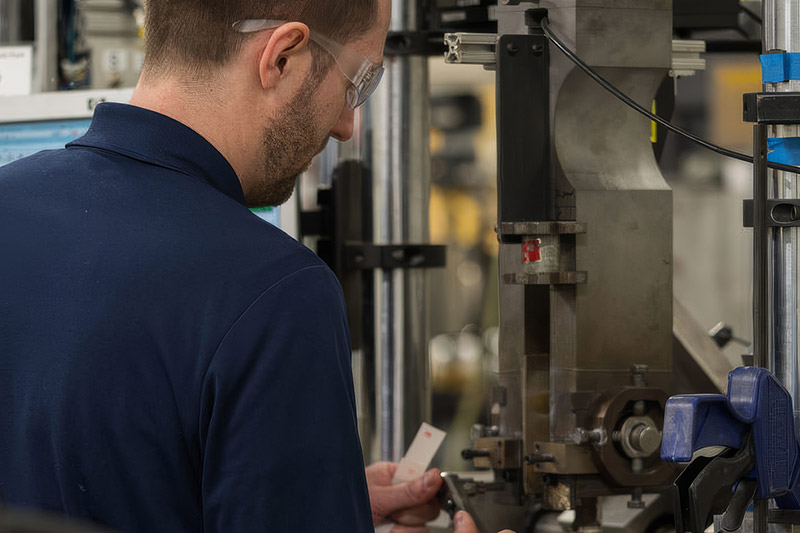
ASTM Testing
Performs evaluations according to ASTM standards, ensuring material and product performance meets established American specifications.

DIN Testing
Conducts testing in compliance with DIN standards, providing verification for products used in German and European markets.
ISO Testing
Executes testing procedures aligned with ISO standards to confirm international compliance and product reliability.

NASM Testing
Completes evaluations in accordance with NASM standards for aerospace and mechanical components.
Client Testimonials
Nick Kattamis – Creare
I wanted to extend a very big THANK YOU for prioritizing this work and helping it get done so quickly. Often times these last minute requests are out of our hands, so again, thank you for your responsiveness.
Ryan Canfield
I’d like to thank Innovative Test Solutions for their excellent work, and for accommodating our second round of testing. This was an important milestone for us, and we will definitely remember you for future needs.
Kris – GE Power
Excellent work on this testing and report write up! As usual, the ITS team exceeded expectations.
Earl Size
Thank you very much! And thank you for going the extra mile in helping us where you thought to. I truly appreciate it.
Richard F. – Chromalloy
The efforts on the erosion test program were excellent. Kyle and Jason did an outstanding job. We were working with many unknowns. Both men made major contributions that resulted in a successful outcome. I now feel confident that we have the recipe to conduct side-by-side erosion tests of coatings on actual parts. I anticipate that we will use the erosion test methodology again in the latter part of 2019. Thanks for your assistance.
Adam – Curtiss Wright
Thank you all for all of your efforts with this program. I have worked with many test labs over the years and must say that you were one of the best I have come across. The responsiveness and willingness to work with us to find a good solution was unprecedented with previous experiences with other facilities. Thank you all for being great to work with.
Key Benefits of Standardized Testing
Standardized testing provides objective verification that products meet established industry and regulatory requirements. By following recognized specifications, manufacturers can ensure consistent quality, reduce risk, and support certification across multiple markets.
- Confirm compliance with ASTM, ISO, DIN, MIL-STD, and NASM standards.
- Ensure consistent, repeatable testing results recognized across industries.
- Support regulatory approval, certification, and market acceptance.
- Reduce risk of product failure, rework, or rejection.
- Provide traceable, defensible data for quality assurance and audits.
- Enable multi-market and international compliance with a single testing partner.
Frequently Asked Questions
What is standardized testing and why is it important?
Standardized testing is the evaluation of materials and components against recognized specifications — such as ASTM, ISO, MIL-STD, and NASM — to verify consistent quality, performance, and safety.
For industries like aerospace, automotive, defense, and construction, it is a prerequisite for certification, regulatory compliance, and market approval. ITS provides testing across multiple domestic and international standards, so clients can demonstrate conformance in a single, coordinated engagement.
How does ITS ensure compliance during standardized testing?
ITS ensures compliance by strictly following every procedural requirement in each applicable standard — from sample preparation through final reporting.
Test equipment is calibrated to spec, engineers are formally trained in each method, and quality reviews are performed at every stage to catch deviations before they affect results. All records are maintained for full traceability, and every report undergoes a technical review before certification is issued.
Which industries require standardized testing?
Standardized testing is required in any industry where safety, reliability, and regulatory compliance are critical.
Aerospace manufacturers must meet ASTM, NASM, and MIL-STD requirements for aircraft components. Automotive and transportation suppliers rely on ASTM, ISO, and DIN standards for material quality and structural integrity. Construction producers test to ASTM and ISO for building code compliance, while defense contractors must satisfy MIL-STD procurement protocols. Medical device and industrial equipment manufacturers also depend on standardized testing to maintain regulatory approval and customer confidence. ITS serves all of these markets, and other industries.
Can ITS test a single product to multiple standards at the same time?
Yes. ITS routinely tests a single material or component against multiple standards simultaneously — a common requirement for products entering multiple markets or industries.
Where standards allow, ITS aligns sample preparation and procedures to reduce redundancy and cost. Clients receive one comprehensive report documenting compliance with each applicable standard, simplifying certification across all target markets.
What is included in a standardized testing report?
A standardized testing report from ITS includes the referenced standard(s), test methods performed, raw data, calculated results, pass/fail determinations, and photographs or diagrams where applicable.
Every report is formatted for direct submission to regulatory agencies or customers, structured for full traceability, and reviewed by a qualified engineer before issuance.
How long does standardized testing take?
Turnaround time depends on the standard and scope of testing — straightforward evaluations typically complete within a few business days, while protocols involving environmental conditioning, fatigue cycling, or corrosion exposure may require several weeks.
ITS works with clients to align testing schedules with production or launch timelines. Expedited options are available for urgent projects where the standard permits acceleration without compromising result integrity.
Recent Posts

How Fatigue Testing Can Prevent Costly Failures in Critical Industries
Fatigue testing does so much more than simply predict product failure. It also helps refine designs and provide valuable insight into material properties and behaviors to support safety and reliability. Many industries rely on rigorous…

Exploring JETS Testing: Key to Aerospace Safety and Efficiency
Exploring JETS Testing: Key to Aerospace Safety and Efficiency The aerospace industry solves some of the most complex issues faced by modern society. This sector has always pushed beyond the limits of what is possible…

High-Cycle Fatigue vs. Low-Cycle Fatigue Testing
Introduction to Fatigue Testing Fatigue refers to the gradual formation of microcracks and cracks in a material under the cyclic loading of stress. Those irregularities reduce the material’s capacity to withstand cyclic loads and ultimately lead…
Speak With A Professional Today
Make an Inquiry or Request a Quote and our team will be in touch.