

Innovative Test Solutions is equipped with high-level burner rigs capable of performing standard jet engine thermal shock testing (JETS) as well as High-‘Q’ thermal gradient testing.
ITS has researched, designed, and developed JETS rigs, which are extremely versatile and can be modified to handle various sample geometries, as well as temperature ranges.
What is Jet Engine Thermal Shock Testing?
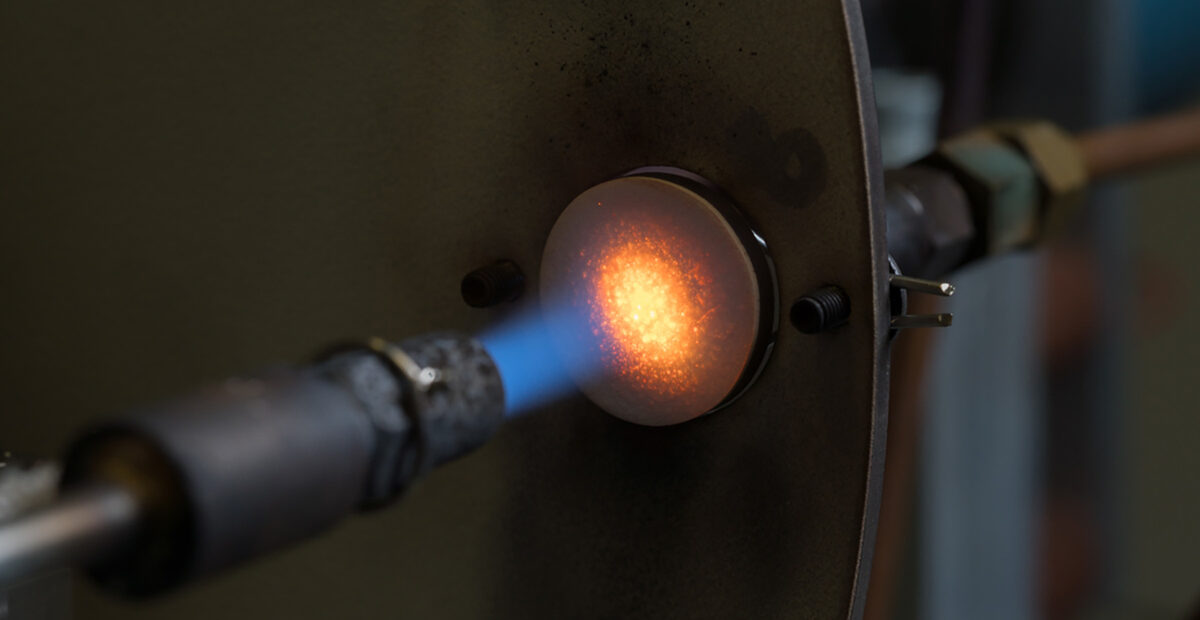
Derived from a burner rig test, JETS testing services creates a substantial thermal gradient across the thermal barrier coating (TBC) as well as the thermo-mechanical stress on the interface.
After the specified amount of testing is complete, the coatings that perform well can then be used to insulate metal components found in gas turbines and aeroengine components.
ITS has numerous methods of JETS testing which can be used for aircraft and industrial gas turbine (IGT) engines manufacturers in the development stage. The tests are also vital in ensuring quality control.
Our production thermal shock/gradient test rigs can achieve front and side temperatures upwards of 3,000 degrees Fahrenheit (1,650 degrees Celsius) using compressed natural gas/oxygen mix — while maintaining suitable back and side temperatures near 1,750 degrees Fahrenheit (955 degrees Celsius) with compressed air.
These testing capabilities are essential in determining the performance and dependability of the specimen.
Frequently Asked Questions
What is JETS testing?
JETS (Jet Engine Thermal Simulation) testing is a specialized method used to evaluate how materials and coatings perform under simulated jet engine conditions. This test exposes materials to extreme temperatures and mechanical stresses, replicating the harsh environment experienced by components in a jet engine, such as turbine blades, combustors, and nozzles.
Why is JETS testing important for aerospace components?
JETS testing is essential for ensuring that materials and coatings used in aerospace applications can withstand the extreme thermal and mechanical stresses encountered in jet engines. By simulating these conditions, manufacturers can assess how components will perform under actual operating conditions, improving reliability, safety, and overall performance in flight.
What types of components are tested using JETS?
JETS testing is typically used for high-performance aerospace components that are exposed to intense heat and mechanical loads. Common components tested include:
- Turbine blades.
- Combustion chamber parts.
- Exhaust nozzles.
- Engine coatings: these parts are tested for their ability to resist thermal degradation, wear, and mechanical failure.
How is JETS testing conducted?
In JETS testing, components are subjected to a carefully controlled environment that replicates the conditions found in a jet engine. The test involves heating the component to extreme temperatures and exposing it to high levels of mechanical stress, while monitoring how the material or coating performs under these conditions. Sensors measure the component’s response, including any signs of wear, cracking, or thermal degradation.
What benefits does JETS testing offer to the aerospace industry?
JETS testing helps aerospace manufacturers ensure the reliability and performance of components that operate in extreme conditions. By simulating the high temperatures and mechanical forces experienced during flight, JETS testing allows manufacturers to identify potential issues before components are used in real-world applications, enhancing safety, efficiency, and lifespan.
What happens if a component fails JETS testing?
If a component fails JETS testing, it indicates that the material or coating is not durable enough to withstand the extreme conditions it would face in a jet engine. This failure could result in issues such as cracking, wear, or thermal degradation. Manufacturers can use this information to re-evaluate the design or materials used, ensuring that only reliable and high-performance components make it into production.
Is JETS testing only used for new parts?
While JETS testing is primarily used for testing new materials and components, it can also be used for parts already in operation. For example, it can be applied to inspect aging components, assess how well coatings have held up over time, or evaluate the effectiveness of repairs and upgrades in existing parts that are exposed to extreme conditions in jet engines.
Can JETS be customized for specific jet engine models?
Yes, JETS testing can be customized to simulate the unique conditions experienced by specific jet engine models. Engineers can adjust variables such as temperature, mechanical stress, and thermal cycling frequency to match the operational conditions of particular engine types. This customization ensures that the testing results are directly relevant to the engine’s real-world performance requirements.
For more information regarding JETS testing services, please request a quote below.
Speak With A Professional Today
Make an Inquiry or Request a Quote and our team will be in touch.