

What are Custom Rig Design Services?
Custom rig design is an engineering service focused on developing purpose-built test fixtures, frames, and mechanical systems used to support specialized testing and validation requirements. These rigs are designed to apply controlled loads, motion, alignment, or environmental conditions that cannot be achieved using standard test equipment alone.
Custom test rigs are commonly required when testing complex components, assemblies, or systems with unique geometries, load paths, or boundary conditions. Rig design ensures that applied forces, constraints, and interfaces accurately represent real-world service conditions while maintaining safety and repeatability. This is critical for generating valid test data and minimizing unintended influences on test results.
Custom rig design is used across product development, qualification, and failure investigation programs. Rigs may be designed to support mechanical testing, fatigue evaluation, wear testing, thermal exposure, or combined loading scenarios. Materials commonly used in rig construction include structural metals, machined components, and modular fixturing elements.
How Custom Rig Design Works
Requirements Definition and Concept Development
Rig design begins with review of test objectives, loading requirements, component geometry, and performance criteria. Engineering concepts are developed to define load paths, fixturing interfaces, safety factors, and instrumentation needs while accounting for test standards and facility constraints.
Detailed Design and Fabrication
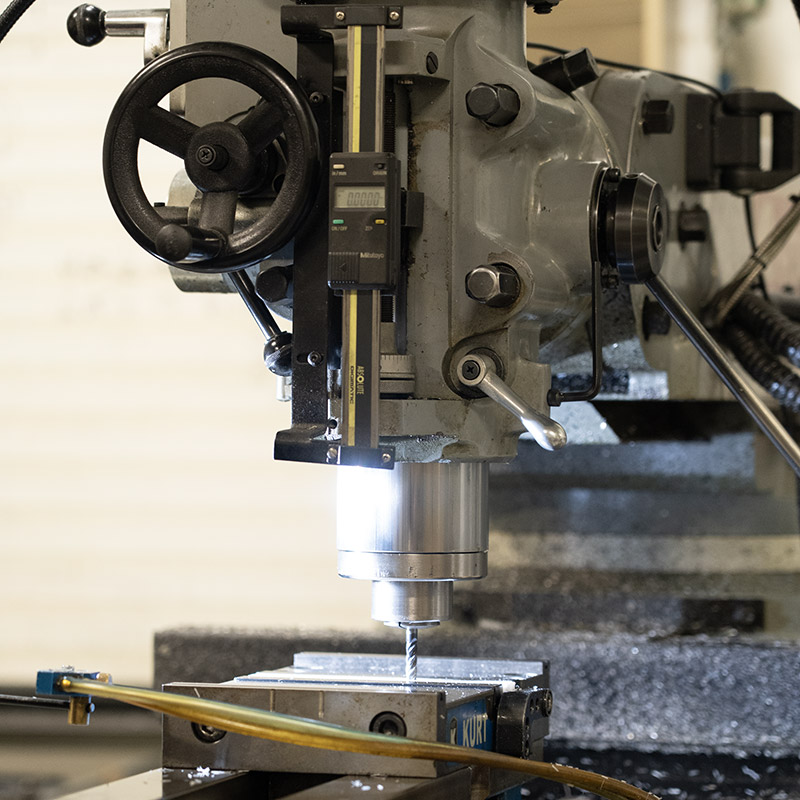
Detailed drawings and models are developed to support fabrication of the rig components. Materials, fasteners, and interfaces are selected to ensure structural integrity and repeatability. Fabrication may include machining, assembly, and integration of sensors or actuators as required.
Verification and Testing Deployment
The completed rig is inspected and verified to ensure dimensional accuracy, structural performance, and compatibility with the intended test setup. Once the rig is cleared for use, testing can begin.
Key Benefits of Custom Rig Design Services
Custom rig design enables accurate simulation of real-world conditions and reduces uncertainty in test results for complex or nonstandard applications.
- Enables testing of components not compatible with standard fixtures
- Improves accuracy of applied loads and boundary conditions
- Supports repeatable and safe test execution
- Reduces risk of invalid or nonrepresentative test data
- Integrates seamlessly with existing test equipment
Frequently Asked Questions
When is custom rig design required for a testing program?
Custom rig design is required when standard fixtures cannot adequately represent the loading, alignment, or constraints needed for a specific test. This often occurs with complex geometries, unique load paths, or combined loading scenarios. Custom rigs ensure that test conditions accurately reflect intended service environments and that data is valid.
Can custom rigs be designed for multiple test types?
Yes, custom rigs can be designed to support multiple test configurations or loading scenarios. Modular designs allow rigs to be adapted for different test programs, reducing the need for multiple fixtures and improving long-term utility.
How are safety considerations addressed in custom rig design?
Safety is addressed through conservative design factors, material selection, load path analysis, and verification inspections. Rigs are designed to withstand applied loads without unintended deformation or failure, and documentation is provided to support safe operation.
Are custom rigs compatible with existing test equipment?
Custom rigs are designed to integrate with existing test frames, actuators, and instrumentation. Interface requirements are defined early in the design process to ensure compatibility and ease of installation.
What documentation is provided with a custom test rig?
Documentation typically includes design drawings, load ratings, assembly details, and operating guidance. This supports installation, operation, maintenance, and audit requirements.
Client Testimonials
Nick Kattamis – Creare
I wanted to extend a very big THANK YOU for prioritizing this work and helping it get done so quickly. Often times these last minute requests are out of our hands, so again, thank you for your responsiveness.
Ryan Canfield
I’d like to thank Innovative Test Solutions for their excellent work, and for accommodating our second round of testing. This was an important milestone for us, and we will definitely remember you for future needs.
Kris – GE Power
Excellent work on this testing and report write up! As usual, the ITS team exceeded expectations.
Earl Size
Thank you very much! And thank you for going the extra mile in helping us where you thought to. I truly appreciate it.
Richard F. – Chromalloy
The efforts on the erosion test program were excellent. Kyle and Jason did an outstanding job. We were working with many unknowns. Both men made major contributions that resulted in a successful outcome. I now feel confident that we have the recipe to conduct side-by-side erosion tests of coatings on actual parts. I anticipate that we will use the erosion test methodology again in the latter part of 2019. Thanks for your assistance.
Adam – Curtiss Wright
Thank you all for all of your efforts with this program. I have worked with many test labs over the years and must say that you were one of the best I have come across. The responsiveness and willingness to work with us to find a good solution was unprecedented with previous experiences with other facilities. Thank you all for being great to work with.
Recent Posts

How Fatigue Testing Can Prevent Costly Failures in Critical Industries
Fatigue testing does so much more than simply predict product failure. It also helps refine designs and provide valuable insight into material properties and behaviors to support safety and reliability. Many industries rely on rigorous…

Exploring JETS Testing: Key to Aerospace Safety and Efficiency
Exploring JETS Testing: Key to Aerospace Safety and Efficiency The aerospace industry solves some of the most complex issues faced by modern society. This sector has always pushed beyond the limits of what is possible…

High-Cycle Fatigue vs. Low-Cycle Fatigue Testing
Introduction to Fatigue Testing Fatigue refers to the gradual formation of microcracks and cracks in a material under the cyclic loading of stress. Those irregularities reduce the material’s capacity to withstand cyclic loads and ultimately lead…
Speak With A Professional Today
Make an Inquiry or Request a Quote and our team will be in touch.