

What is JETS Testing?
Jet engine thermal shock (JETS) testing is a type of material testing designed to provide insight into the characteristics of the provided sample. Derived from a burner rig test, JETS testing services create a substantial thermal gradient across the thermal barrier coating (TBC). It also assesses thermo-mechanical stress on the interface.
JETS focuses on the effects of rapid temperature changes. It is typically used for high-performance aerospace components that are exposed to intense heat and mechanical loads.
Common components tested include turbine blades, combustion chamber parts, and exhaust nozzles. JETS can also test engine coatings to determine their ability to resist thermal degradation, wear, and mechanical failure.
JETS testing is critical for aerospace industry testing, and it is also useful in the automotive and other industries. Manufacturers, designers, and researchers primarily use JETS for testing new materials and components, although it is also effective for testing used parts that are already in operation. For example, it can be applied to inspect aging components, and it can evaluate the effectiveness of repairs and upgrades in existing parts that are exposed to extreme conditions in jet engines.
JETS testing is highly effective in assessing how well coatings have held up over time. After the specified amount of testing is complete, manufacturers can confidently use the coatings to insulate metal components found in gas turbines and aeroengine components.
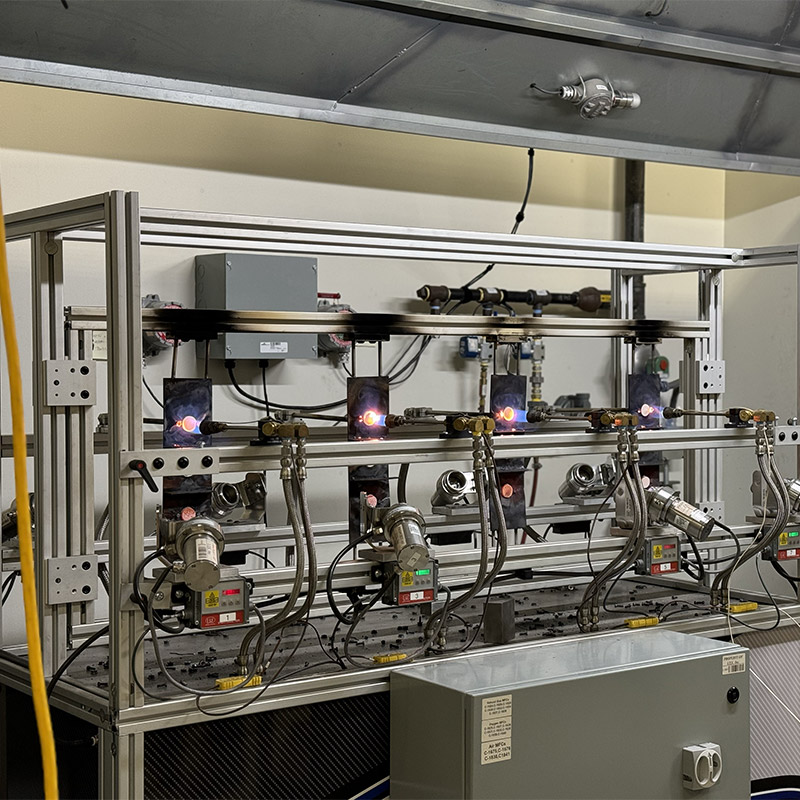
How JETS Testing Works
During JETS testing, components are subjected to a carefully controlled environment that replicates the conditions found in a jet engine. Testing personnel monitor the test and work with each client to gain a deeper understanding of the insights gained from the results.
Preparing the Rig
The test rig is calibrated according to testing requirements, including the necessary front, back, and side temperature stipulations.
Beginning the Test
The test exposes materials to extreme temperatures and mechanical stresses, replicating the intended operating environment.
Monitoring the Sample
The ITS team monitors how the material performs using sensors to measure the component’s response.
Evaluating the Results
Engineers involved in the test review and communicate the results, noting any signs of wear, cracking, or thermal degradation.
Key Benefits of JETS Testing
Because it simulates real-world operational conditions, JETS testing gives designers and researchers a comprehensive view of what to expect from a product or component. Along with this primary benefit, it also offers various additional advantages, including:
- Helps manufacturers ensure components and materials will be reliable
- Ensures performance in extreme operating conditions
- Identifies potential problems and limitations before putting components into use
- Enhances safety, efficiency, and material or component lifespan
- Provides research and development teams with insight into materials’ durability
- Facilitates early optimization of design or material selections
- Ensures only high-performance options move into production
Frequently Asked Questions
What can be tested in a JETS rig?
Some of the most common components that ITS tests in a JETS rig include turbine blades, combustion chamber parts, exhaust nozzles, and engine coatings. This testing method is ideal for high-performance components that will be exposed to intense levels of heat and mechanical loads. It’s frequently used for aerospace components, most commonly new materials and components, but also for parts already in operation. Call ITS or complete the online form to ask us any questions regarding the service that is needed.
What is the fuel for a JETS rig?
ITS’ JETS rigs are fueled with a mix of compressed natural gas and oxygen, which makes it possible to achieve higher temperatures. This is critical for accurate testing of components of materials used in gas turbine engines and other high-temperature, high-velocity thermal environments.
What sample geometry is possible to test?
Sample geometry is a significant factor in testing, as the rig must be calibrated to account for variations in shape and size. Those that are irregular or large may take longer to heat or cool than small, uniform samples. The ITS team can adjust testing rigs according to the sample and even create custom rigs when needed.
Do you manufacture JETS rigs?
Yes, the ITS team is an industry leader in designing and manufacturing custom test rigs. Recognizing that some testing scenarios don’t fit the standard, our team of expert, qualified engineers work with clients to build custom solutions that meet all requirements. Ultimately, ITS has one goal: to deliver precision testing solutions that accurately simulate real-world use and accommodate available samples of varying sizes and geometries.
What makes ITS an industry leader in JETS testing?
ITS has an ISO/IEC 17025 accredited mechanical engineering and testing laboratory equipped with high-level burner rigs capable of performing rigorous methods of JETS testing. ITS’ team of expert engineers can custom build rigs and modify existing ones as needed to accommodate varying sample sizes and temperature ranges. Additionally, ITS’ production thermal shock/gradient test rigs can achieve significant front and side temperatures and cooler back and side temperatures. These testing capabilities are essential in determining the performance and dependability of the specimen.
How to choose a JETS testing service provider?
Look for a provider that can meet your needs and provide the rigorous testing environment necessary to achieve reliable results. ITS has numerous methods of JETS testing. The team frequently works with aircraft and industrial gas turbine (IGT) engine manufacturers during the development stage or during quality control.
Client Testimonials
Nick Kattamis – Creare
I wanted to extend a very big THANK YOU for prioritizing this work and helping it get done so quickly. Often times these last minute requests are out of our hands, so again, thank you for your responsiveness.
Ryan Canfield
I’d like to thank Innovative Test Solutions for their excellent work, and for accommodating our second round of testing. This was an important milestone for us, and we will definitely remember you for future needs.
Kris – GE Power
Excellent work on this testing and report write up! As usual, the ITS team exceeded expectations.
Earl Size
Thank you very much! And thank you for going the extra mile in helping us where you thought to. I truly appreciate it.
Richard F. – Chromalloy
The efforts on the erosion test program were excellent. Kyle and Jason did an outstanding job. We were working with many unknowns. Both men made major contributions that resulted in a successful outcome. I now feel confident that we have the recipe to conduct side-by-side erosion tests of coatings on actual parts. I anticipate that we will use the erosion test methodology again in the latter part of 2019. Thanks for your assistance.
Adam – Curtiss Wright
Thank you all for all of your efforts with this program. I have worked with many test labs over the years and must say that you were one of the best I have come across. The responsiveness and willingness to work with us to find a good solution was unprecedented with previous experiences with other facilities. Thank you all for being great to work with.
Recent Posts

How Fatigue Testing Can Prevent Costly Failures in Critical Industries
Fatigue testing does so much more than simply predict product failure. It also helps refine designs and provide valuable insight into material properties and behaviors to support safety and reliability. Many industries rely on rigorous…

Exploring JETS Testing: Key to Aerospace Safety and Efficiency
Exploring JETS Testing: Key to Aerospace Safety and Efficiency The aerospace industry solves some of the most complex issues faced by modern society. This sector has always pushed beyond the limits of what is possible…

High-Cycle Fatigue vs. Low-Cycle Fatigue Testing
Introduction to Fatigue Testing Fatigue refers to the gradual formation of microcracks and cracks in a material under the cyclic loading of stress. Those irregularities reduce the material’s capacity to withstand cyclic loads and ultimately lead…
Speak With A Professional Today
Make an Inquiry or Request a Quote and our team will be in touch.