

News & Resources
How Testing Benefits Product Success

Today’s marketplace is ultra-competitive. To succeed, it’s critical to launch products that meet quality and performance requirements.
Product testing comes in many forms and is vital in the research and development process. It can validate materials, provide quality assurance, and aid in refining designs and ensuring compliance with any applicable regulations or standards. Perhaps even more importantly, product testing can help develop consumers’ confidence, which is a key component related to product success.
A myriad of factors drive product success, from offering a unique value proposition to continually evolving with iterations that best meet customers’ needs. Perhaps most importantly, however, is the ability to launch products that perform as intended and provide an excellent customer experience.
As a product innovator, it is critical to put yourself in the shoes of the end user. How likely would you be to buy or continue to buy a product that breaks down with normal use? How would you feel about a product that doesn’t ultimately live up to its promises?
That is one of the goals of rigorous testing as part of the product development process. Fatigue testing procedures provide critical data regarding material components and products. Let’s explore the role of fatigue testing in product design and development in further detail.
Fatigue Testing Product Success
Fatigue testing is particularly important for products, parts, and materials used in the automotive, aerospace, and aviation industries, where safety is paramount. However, it is beneficial for brands across many industries, as this specialized testing method helps predict the lifespan of the product, component, or material being tested. It also helps determine the sample’s ability to withstand the real-world conditions where it will be used.
The results empower the research and design team with critical information. This includes details about the product’s service life, operational safety, and the ability of various products to withstand stress and strain.
Why You Should Test for Fatigue
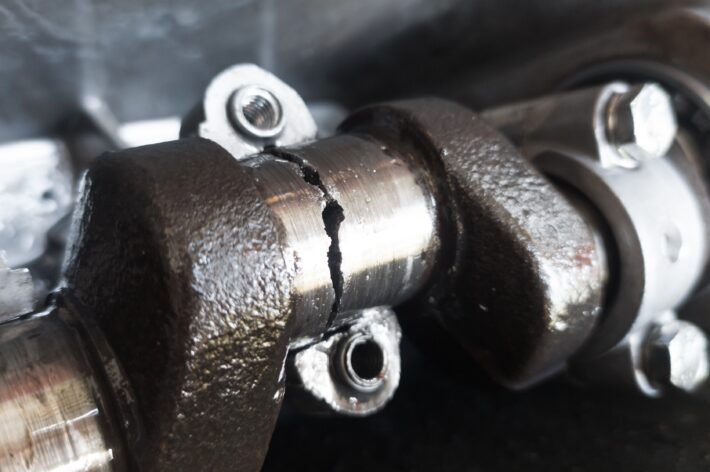
Just about every material can experience fatigue at some point during its lifespan, although metals, composites, and polymers are often more susceptible. Given the number of elements that go into product design, production, refinement, and launches, rigorous product testing is a must. Failure to test for fatigue could hinder a product’s success at best and lead to failure and other consequences in the worst-case scenarios.
Fatigue testing procedures can help prevent otherwise preventable catastrophic failures. The data imparts critical insights and provides various benefits, including the following:
- Gain keen insight into the progressive effects of multiple stress loads over time
- Verify material and component strength and overall product quality
- Ensure product safety and the safe performance of critical components
- Assess products for weak spots and uncover design flaws early in the process
- Use the results to help refine designs and provide detailed for planned maintenance
Material Testing
A vital part of research and development is understanding how materials behave. When manufacturers understand materials’ resistance to stress and strain, their failure points, and their characteristics, they are empowered. That information can help ensure they release the best possible products and ensure reliability and safety.
Fatigue testing takes the sample and subjects it to stress levels that are on par with the actual conditions using key principles. including:
- Subjecting samples to cyclic loads
- Applying stress levels according to the type of fatigue testing performed
- Using frequencies according to the intended use cases
- Running the tests continually until failure occurs
At Innovative Test Solutions, the team typically performs low-cycle or high-cycle testing using digitally controlled, servo-hydraulic test frames that capture data throughout the process. Low-cycle fatigue testing relies on stress levels above materials’ yield strength and low frequencies. High-cycle fatigue testing uses stress levels below the material’s yield strength and higher frequencies designed to duplicate environmental conditions.
Customized Methodologies
To optimize the benefits of product testing, it is essential to simulate the conditions that products will be exposed to during the process. For example, when testing a gas turbine, you would use high-cycle fatigue testing and high vibration levels to mimic real-world conditions. Working with industry leaders makes it easier to access the customized methodologies that best suit the materials, the products, and the operating environments.
ASTM Standards
The American Society for Testing and Materials (ASTM) is a global organization that has been tasked with setting international standards since 1898. These standards provide guidelines governing product quality and safety and feature prominently in many regulations and laws. When choosing a product testing provider, it’s essential to ensure you partner with a company that tests according to ASTM standards in a lab that has industry accreditation.
Product Testing Solutions for Successful Research and Development
The Innovative Test Solutions team has decades of expertise in conducting fatigue testing procedures and other specialized testing procedures. We have extensive experience in engineering and the research and development process, which provides another layer of support when it comes to our clients’ product testing needs. The ITS team will help guide the process, make testing recommendations, and even create custom testing environments within our ISO/IEC 17025 accredited facility.
If you’re ready to take the next step in your product development process or want additional information about fatigue testing for product success, contact ITS today.

For More Information About Our Testing Services, Contact Us Today.
Through constant improvement, innovation, and thorough testing, ITS is able to create an environment that ensures personal and professional success. To secure your future, contact us for more information.