

News & Resources
Fatigue Life Estimation – Balancing Safety and Cost-Effectiveness

In the industrial world, every material has a limit to the amount of stress it can withstand before developing defects and ultimately failing. Normal operating conditions subject materials to various stressors, including temperature fluctuations, wind shear, corrosion, and more. Understanding what that limit is can mean the difference between safe operation of a piece of equipment and catastrophic failure.
With so much on the line, product developers and engineers turn to fatigue testing for guidance on calculating fatigue life estimation. These critical data points can drive decisions regarding material selection, dictate service schedules, and help predict longevity and performance.
Introduction to Fatigue Life Estimation
As modern industry continues evolving, the need for increased speed, precision, and safety has emerged as a leading issue. Reliability of both finished products and their parts is critical to avoid unplanned downtime and threats to human health and safety. With a failure damage rate of more than 80 percent and the corresponding economic implications, product designers and manufacturers are increasingly turning their attention to fatigue life estimation.
Defining Fatigue Life in Engineering
As products, components, and materials are put to use, they undergo varying patterns of stress and strain. In engineering, fatigue life refers to the number of stress or strain cycles that materials can go through before they fail. Various factors, including the properties of the material, environmental conditions, and operating conditions, can impact fatigue life. For this reason, fatigue testing that duplicates the normal use of a testing sample can provide the most accurate data for fatigue life estimation.
Importance of Estimating Fatigue Life in Product Design
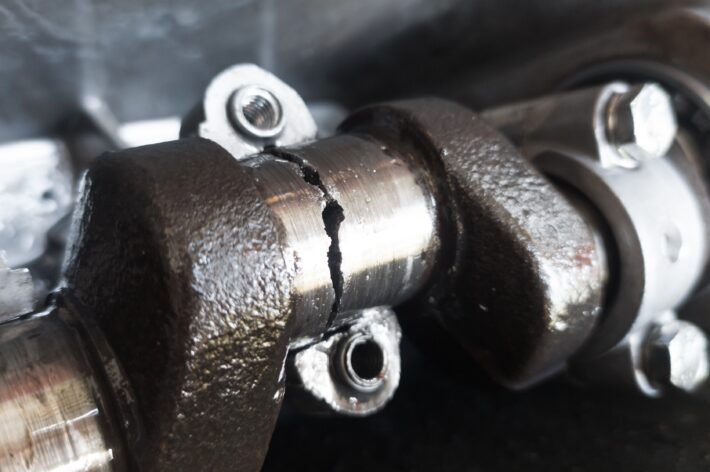
Engineering failures typically result from fatigue. However, fatigue failure often occurs with little to no warning ahead of time, which can result in damaging, possibly even disastrous consequences. One infamous example is the De Havilland Comet disaster. These passenger jets were the first of their kind, initially taking flight in the summer of 1949.
In 1953 and 1954, two of these planes disintegrated over the Mediterranean Sea in mid-flight. Later investigations revealed that the planes’ pressurization created repeated stress cycles that initiated cracks in the planes’ fuselage, which reached critical status with no advance warning.
This example underscores the importance of the critical nature of fatigue data. Fatigue life estimation helps predict when failure may occur. It also provides data that can help avoid it, either by refining designs, choosing different materials, or staying ahead of problems with appropriate service schedules.
Fundamentals of Fatigue Testing
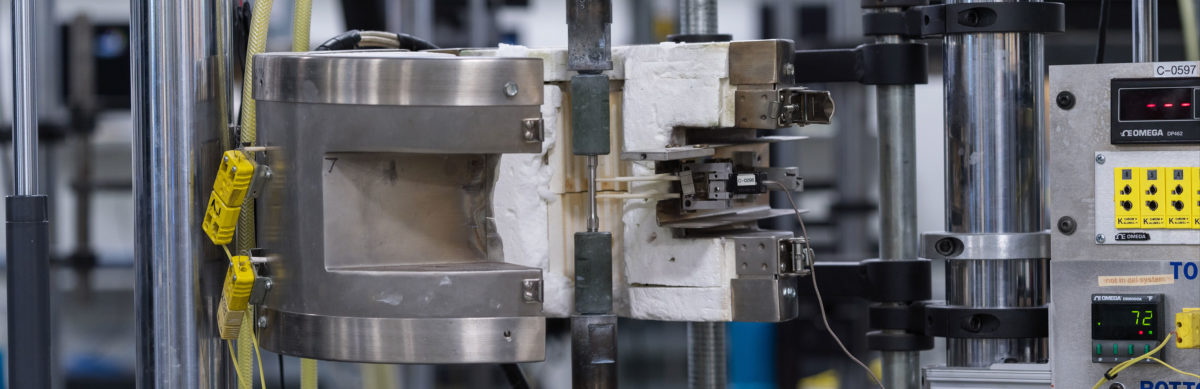
Fatigue testing determines a testing sample’s ability to withstand operating conditions, ultimately providing a gauge by which designers can predict its lifespan. Fatigue testing simulates real-world conditions and measures the impact of cyclic forces over time to predict the sample’s fatigue life.
Overview of Fatigue Testing Methods
Mechanical fatigue tests use specialized machinery to apply cyclic loads to test samples. Using servo-hydraulic machines, the materials undergo low-cycle or high-cycle fatigue testing. Low-cycle fatigue testing uses low frequencies and stress levels typically higher than the material’s yield strength. High-cycle fatigue testing utilizes stress levels below the material’s yield strength with a range of frequencies and many cycles — sometimes more than one million.
Key Parameters in Fatigue Testing
Some of the critical parameters in fatigue testing include the following:
- Loading conditions, such as the stress ranges, number of cycles, and amplitude
- Material properties, including its S-N curve, a logarithmic scale correlating to stress and the number of cycles to failure
- Fatigue models, which report data points like mean stress in relation to fatigue life
- Environmental factors, like corrosion, vibration, and temperature, all of which can directly impact fatigue life
Challenges in Estimating Fatigue Life
Although testing and processes have improved greatly, estimating fatigue life can present several challenges. The most notable challenge is recreating the complex environments in which products will be used and the variability of material responses.
Variability of Material Response
Although nearly every material can experience fatigue during a lifespan of use, each one reacts differently and has higher or lower fatigue limits. Additionally, the material’s surface finish can impact fatigue life, as can its structural shape. For example, smooth surfaces often increase fatigue life, while sharp corners can increase stresses and the likelihood of crack initiation.
The material response can vary widely. For example, when examining the fatigue life of a welding process, the process itself can alter the chemical compositions of the filler alloy and base metals. This in turn potentially alters the metallurgic structures and the fatigue life in unanticipated ways.
Complexity of Real-World Loading Conditions
Temperature, vibration, humidity — these are all conditions that don’t necessarily remain static, and each factor can hasten fatigue. Additionally, the nature of the loading and whether it’s constant or variable can also create significant fluctuations in fatigue life.
Strategies for Optimizing Fatigue Life
Fatigue testing and fatigue life estimation provide invaluable opportunities to optimize product design. Engineers and manufacturers can apply testing data to refine designs and maximize fatigue life.
Material Selection and Treatment
Where one material fails, another might withstand the test of time. Refining material selection and revisiting the treatment of those materials can make a significant impact on fatigue life. For example, designers might rebalance the strength and stiffness of fiber-reinforced polymers to extend fatigue life. Alternatively, manufacturers might opt to alter the alloy composition to add chromium to steel for improved fatigue strength.
Design Improvements to Enhance Fatigue Strength
By estimating the fatigue life of a product, the door to optimizing designs swings wide open. This applies not only to refining material selection, but also to enhancing product designs. In some instances, it could mean altering components’ size or shape to minimize localized stress. In others, engineers may incorporate fatigue design methods such as infinite-life design, which ensures stress levels remain below the fatigue limit.
Balancing Safety and Cost in Fatigue Life Estimation
Fatigue is a complex safety and economic issue. The financial implications can be massive. Moreover, the potential loss of human life, particularly in applications like aerospace, can be staggering.
Economic Impact of Fatigue Failures
Experts estimate that fatigue failures cost an average of 4 percent of the United States’ gross domestic product (GDP) every year. Given the country’s current GDP, which the Bureau of Economic Analysis estimates at $29.35 trillion in 2024, it’s easy to see that these failures come with an enormous potential price tag. Fortunately, it’s one that can be mitigated in large part with fatigue testing and fatigue life estimation.
Cost-Effective Approaches in Fatigue Testing
Product designers and engineers who take a proactive approach by engaging in fatigue testing are already on the road to cost containment. It’s far easier and less expensive to refine material selections and revamp designs than to cope with a calamity caused by fatigue-related failure. Partnering with a testing company that can closely duplicate real-world operating environments can contain project costs and yield optimal data.
Contact ITS for Assistance with Your Fatigue Testing
Innovative Test Solutions is an industry leader with a team of experienced engineers and a full-service, ISO/IEC 1705 accredited testing laboratory. We specialize in the mechanical behavior of structural materials and structures, with fatigue among our primary areas of focus. ITS tests to ASTM standards and can create custom testing solutions when needed for rigorous testing and reliable data. Contact us to learn more or to request a quote.
For More Information About Our Testing Services, Contact Us Today.
Through constant improvement, innovation, and thorough testing, ITS is able to create an environment that ensures personal and professional success. To secure your future, contact us for more information.